Tattoo Sleeves & Large-Scale Tattoos in Tucson
Sleeves, back pieces, large custom compositions, and multi-session tattoo projects planned around the body instead of treated like a collection of unrelated images.
Large Tattoos Need a Plan Before They Need More Detail
A sleeve or back piece has to work from across the room and up close. The major shapes, empty space, direction, transitions, and how the tattoo moves around the body matter before tiny details do. Good large-scale work is designed as one composition even when it takes multiple sessions to finish.
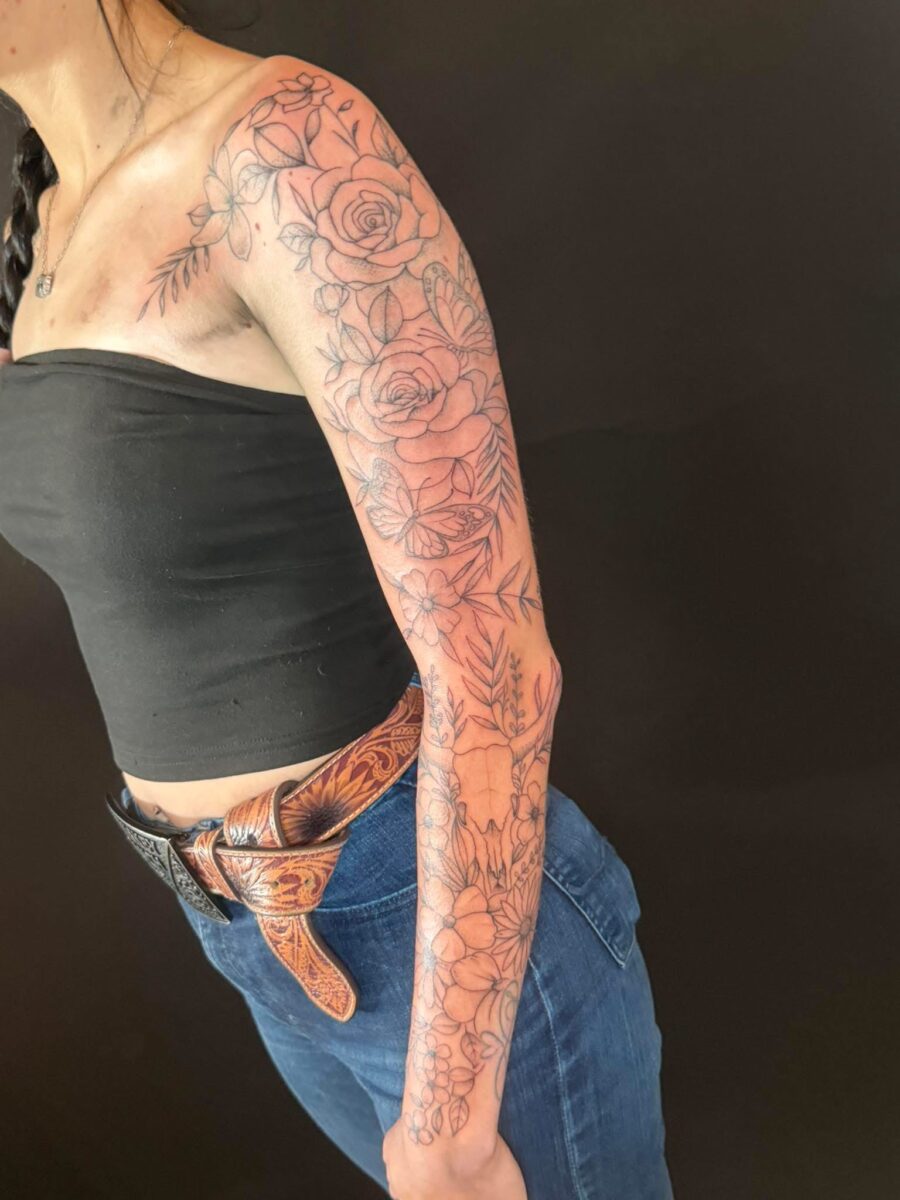
Eric — Fine-Line Floral Sleeves
Eric’s floral sleeve shows one way to build a large tattoo through repeated botanical elements, open skin, and connected movement. The goal is not to fill every inch; it is to make the arm read as one intentional piece.
Jinx — Back Pieces & Sleeves
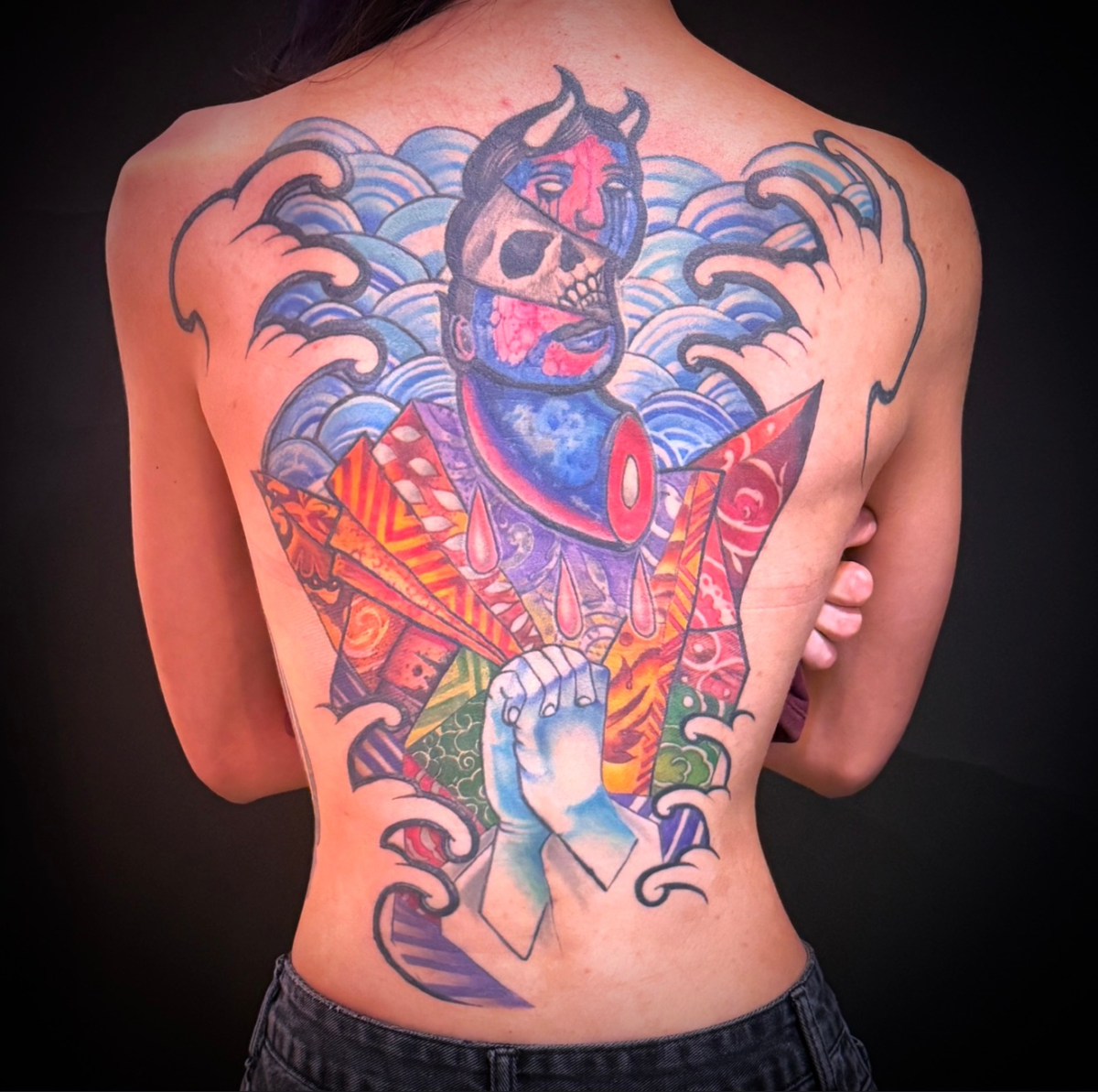
Jinx works on back pieces, sleeves, and other multi-session projects where large shapes, contrast, flow, and transitions have to be solved across an entire body area. His cubist back piece uses the width of the back as part of the composition, while his blackwork sleeve shows a denser, higher-contrast approach to large-format work.
Jasmine — Large Illustrative Back Pieces
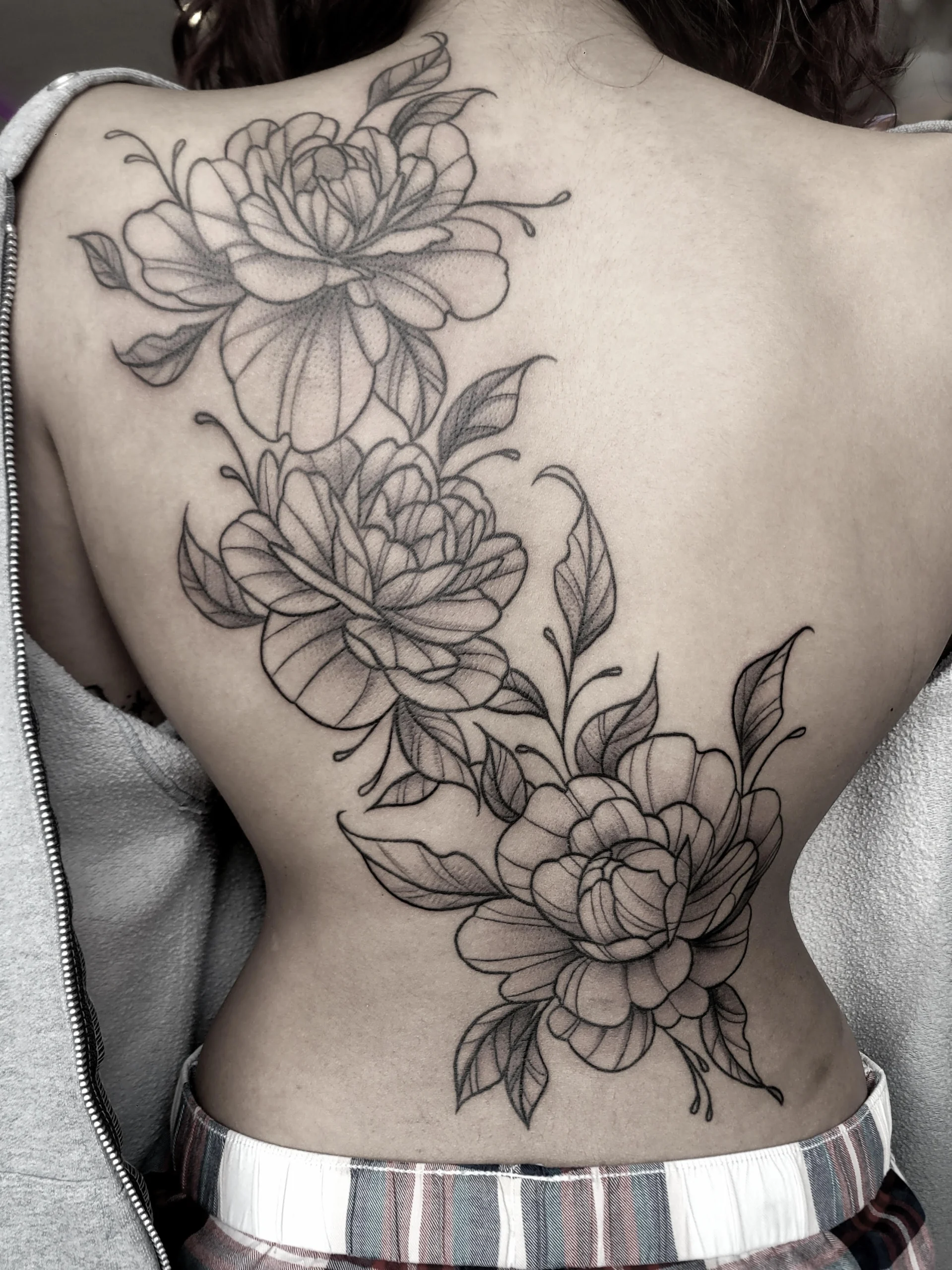
Jasmine’s floral back piece shows how a large project can use the width and shape of the back rather than simply scaling up a smaller tattoo. The composition has room to breathe and can be read as a complete image from a distance.
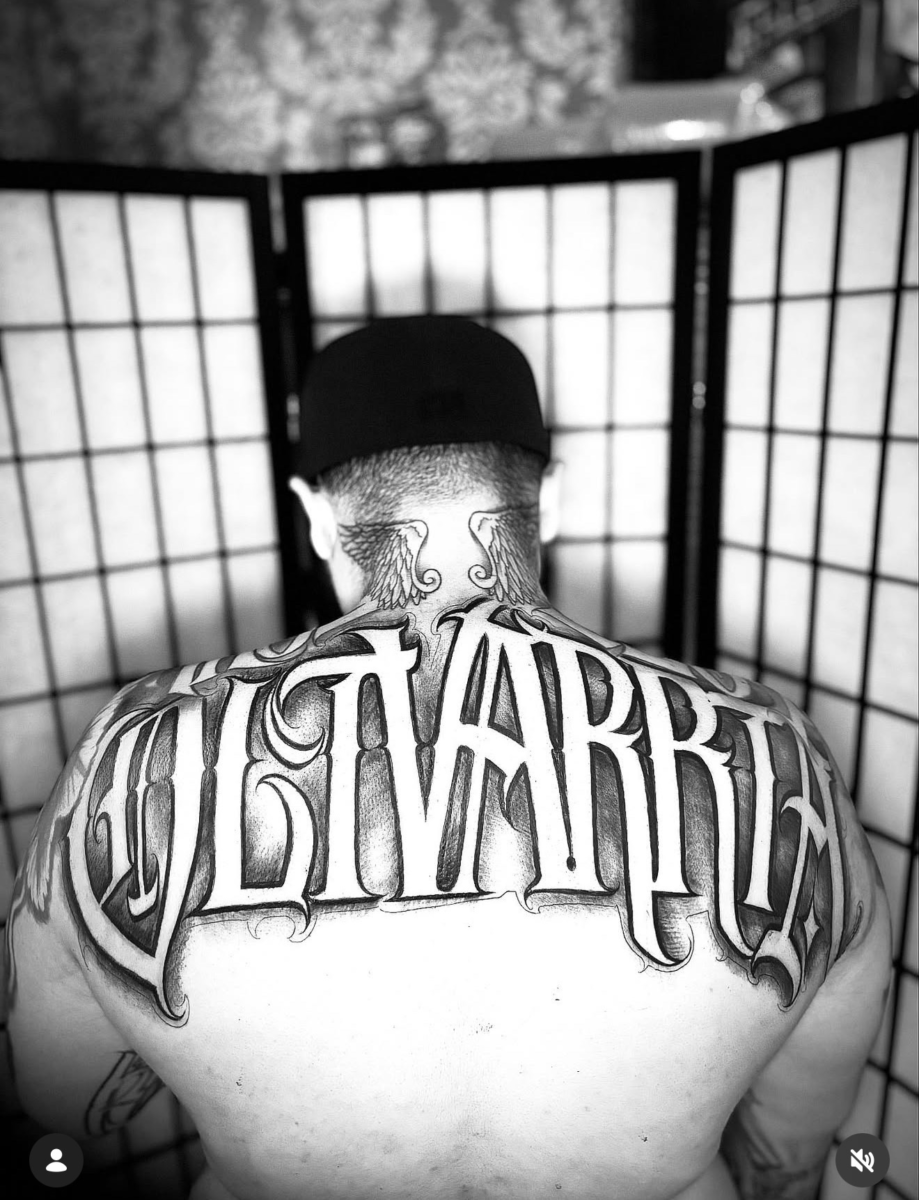
Jay — Large Custom Lettering & Black-and-Grey
Jay does substantial large-format work, including dark sleeve concepts, large black-and-grey projects, and custom lettering built to fill major body areas. This upper-back piece shows lettering designed around the full width of the shoulders instead of enlarged from a smaller script tattoo.
Sleeve Planning Starts With the Whole Arm
A sleeve is easier to build well when the artist knows the long-term goal from the beginning. Existing tattoos, future subjects, elbow and shoulder movement, areas of open skin, and where the composition should become heavier or lighter all affect the plan.
If you already have tattoos that need to become part of the project, bring clear photos of the entire arm or body area—not only close-ups of the individual tattoos. That makes it easier to see what can be connected, what needs breathing room, and whether any section may need a rework or cover-up.
Large-Scale Does Not Mean One Style
Fine-line florals, blackwork, illustrative color, black-and-grey realism, Japanese-inspired composition, ornamental work, and dark art can all become large-scale tattoos. The important part is choosing an artist whose visual language matches the project you want to live with across an entire arm, leg, back, chest, or other major area.
For darker large-scale work, see Blackwork Tattoos Tucson. For botanical projects, see Floral & Botanical Tattoos Tucson. If existing work needs to be incorporated or transformed, see Cover-Up Tattoos Tucson.
Expect Multiple Sessions
Large tattoos are usually built in stages. The exact number and length of sessions depend on the design, placement, amount of detail, healing, color or black-and-grey approach, and how the project is divided. A consultation is the right place to establish the overall plan before the first session starts.
What to Bring to a Large-Scale Consultation
Bring the body area you want to cover, the subjects or imagery you care about, references for the visual style, and photos of any existing tattoos in that area. You do not need every inch planned in advance, but the artist should understand the direction of the whole project before designing the first major section.
Not Sure Which Artist Fits?
Compare the artists by composition, line weight, contrast, color, and the kind of large-format work already in their portfolios. If you are still unsure, Zoltar can help narrow the match.